How we build a useful page.
Our method favours traceable labels, careful wording and practical South African context over speed or dramatic claims.
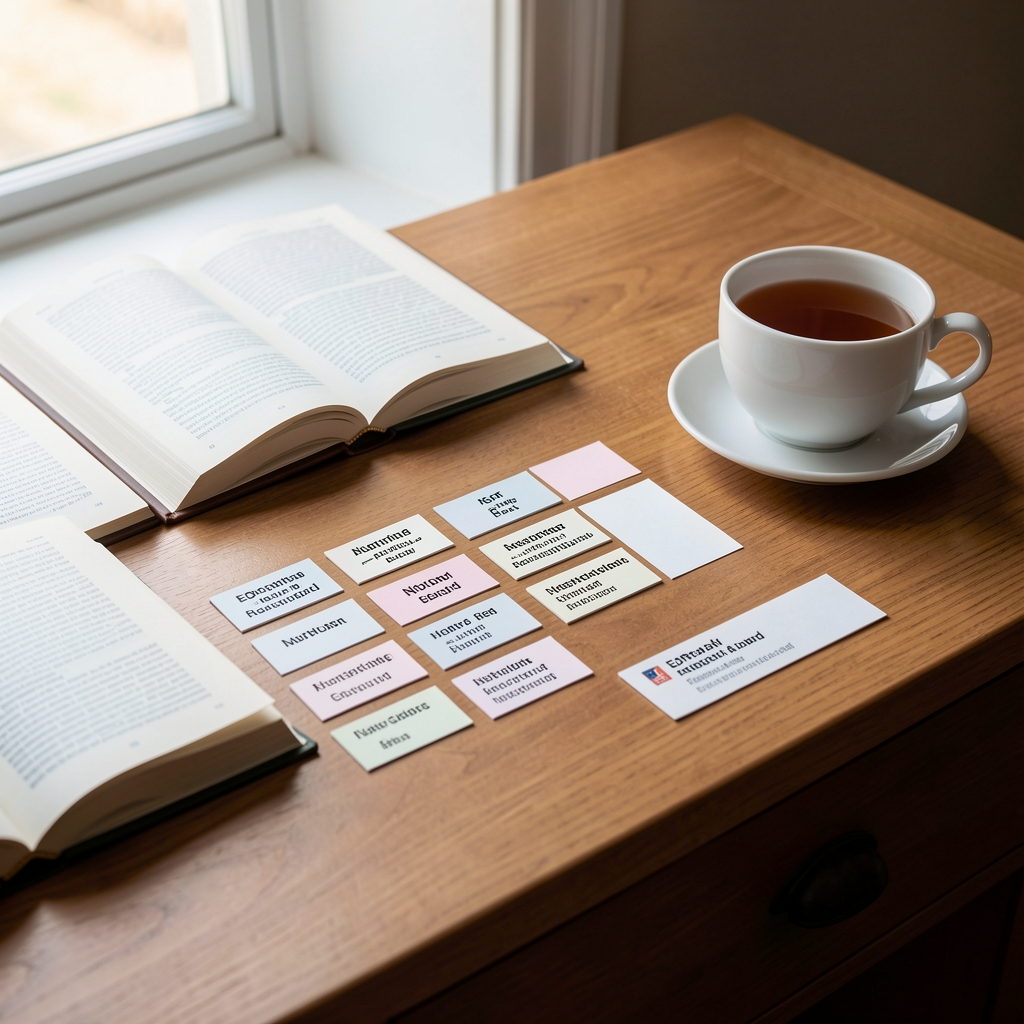
Four editorial passes
Every formula guide moves through the same four passes before it is published, regardless of how familiar the ingredient may seem to our writers.
- Scope: We define the reader question and keep the page within food supplement education, not personal recommendation.
- Source: We check ingredient names, forms, quantities and reference values against the supplied label material line by line.
- Language: We distinguish nutrient function wording from ingredient-only descriptions, and flag any phrase that could read as a promise.
- Review: We scan for overstatement, unclear context and missing practical notes before a second editor signs off.
What each pass is checking for.
| Pass | Primary question | Typical output |
|---|---|---|
| Scope | What does the reader actually want to know? | A one-paragraph brief for the writer |
| Source | Does every figure match the label? | An annotated ingredient table |
| Language | Is any sentence stronger than the evidence allows? | A marked-up draft with suggested edits |
| Review | Would a new reader understand this without help? | A publish-ready page with a review date |
A short glossary for new readers.
- Nutrient function claim
- Wording permitted under Regulation (EC) No 1924/2006 describing an established role of a specific nutrient.
- Ingredient-only description
- A factual note about where an ingredient comes from, used when no approved function claim applies.
- Review date
- The date a page was last checked against current labelling practice and reference values.
- Second editor
- A colleague who did not draft the page and checks it independently before publication.
Questions about our method.
Do you test the products yourselves?
No. We review publicly available label information and published reference values; we do not conduct laboratory testing.
How often are pages reviewed?
Formula guides are reviewed at least once a year, or sooner if labelling regulation or reference values change.
Who writes the pages?
A small in-house team based in Cape Town drafts and edits every page using the four-pass method described above.
Good editorial work gives readers enough context to ask better questions, not a reason to stop asking them.
What we do not publish
We do not publish personal assessments, dosage instructions beyond the label, or comparisons framed as health guidance. Readers with specific concerns are directed to a qualified healthcare professional.
What we publish instead
We publish ingredient explainers, label comparisons, food context and notes on responsible reading. Updates are dated so that readers can understand when a page was last reviewed, and older pages are revisited rather than left unattended.